When is Manipulation in Advertising Okay?

Manipulation: the action of controlling someone in a clever or unscrupulous way.

It’s a touchy subject, but arguably advertising in its purest form is manipulation. Campaigns want to change behaviour or elicit a response. You can’t argue with that. 

But we’re not in the business of manipulation, are we? We’re in the business of moving and compelling people to engage with, share and advocate a brand or product.

We’re in the business of storytelling.

Meet documentary maker Ken Burns—a master of manipulation through the medium of storytelling. He’s the man behind titles such as The Civil War and Baseball. He argues a good point and one that has inspired this blog post.

Manipulation is present in every story whether we like it or not.

Share

Finding Tips for Social Success at the Bottom of a Wine Bottle

I stood in the hills of Le Plan de la Tour, in Provence, France, just a short drive from Saint-Maxime and 20-minute ferry to Saint-Tropez. I looked over the beautiful vineyard that sat just steps from the small cottage my wife and I were renting with another couple for a week last October. The air had the perfect morning chill that required only your most comfortable sweatshirt, but implied that the day would be beautiful and warm, as it seemed every day must be in such a beautiful place. I could only imagine the stories that each grape held about its journey from vine to glass.

Share

Fight Club, Cinderella, and What Storytelling Means for Brands

What does Cinderella have in common with Fight Club?

Lots, according to Jon King, Story Worldwide's Chief Storyteller. During the ‘Storytelling for Brands’ session at our London office last week, part of Social Media Week London, we shared Story’s brand-centred approach to narrative content.

We draw our inspiration from the most important study of storytelling ever done, The Hero with a Thousand Faces, by Joseph Campbell. Campbell’s insights have influenced and guided the approach, which he called the hero’s journey and which is used in all forms of narrative, including classic films from Cinderella to Fight Club.

Share

Social Media Week London 2012: The Full Story

It’s time to get your Twit on and fire up your Facebook! Social Media Week London is back and it promises to be bigger and more collaborative than ever.

For those of you who don’t know, Social Media Week returns to London for it’s fourth consecutive year from 24th – 28th September 2012. Hosted by Chinwag, this year’s theme is Empowering Change Through Collaboration. Digital dons and social-savvy client-siders will reflect on the global impact of social media and its role as a catalyst in driving cultural, political, economic and social change.

Share

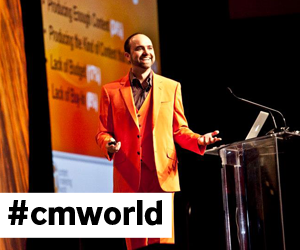
5 Tweetable Lessons Learned from Content Marketing World

This past week I had a front-row seat at the largest content-marketing conference in the world, aptly named Content Marketing World. Hosted by our friends at the Content Marketing Institute, Content Marketing World was two full days of rubbing elbows with those in marketing (more than 1,000) who understand the value of using a coordinated array of media to engage consumers, deliver value and tell a brand’s story.

With speakers like Mark Schaefer (of Post-Advertising Summit fame), Jason Falls, Jay Baer, C.C. Chapman, Mitch Joel, Ann Handley and Jack Hanna (yes, that Jack Hanna), the conference armed me with a plethora of content-marketing tips to tweet to my followers.

Here are 5 nuggets of content-marketing knowledge and inspiration, short enough for you to tweet, that were imparted at Content Marketing World. 

Share

Post-Advertising Survival Guide Vol 5: Introduction to Social Media

Social media has emerged on the marketing landscape and quickly helped redefine how brands market to today’s always-connected consumer. Tools like Facebook, Twitter, Google+ and Instagram have created two-way avenues of communication and media sharing between brands and their audiences. The possibilities seem endless, and many brands that have yet to embrace these tools are peering down off the edge of the diving board, ready to make a big splash. But it’s not that easy.

Share

7 Reasons Storytelling Is Important for Branded Content

Gutenberg invented the printing press around 1440. 
The first radio transmissions were in the early 1900s.
The television became commercially available less than a century ago. 
The Internet is not even old enough to have a drink (legally; at least not in the United States).
Facebook and Twitter are just out of diapers, and the next big marketing tool is still in the womb or possibly just a twinkle in its creator’s eye. 

When most people think about marketing, these are the tools they think of: print, radio, TV and the web. None of these, however, are ingrained in us as much as storytelling. We’ve been telling stories for thousands of years, but we don’t have to go back that far to understand storytelling’s powerful effect on our hearts and minds. Go back only as far as your childhood, when you begged your parents to read your favorite story—the one you already knew by heart—just one more time. Why did you do that? Why was it so important to hear that story?

Share

Microsoft’s “Brandon Generator” is Close, but No Cigar

Post-advertising is based on brands genuinely adding value to consumers’ lives by generously giving them valuable content. By providing rewarding experiences, brands earn the right to expose consumers to their products and services. At its core, post-advertising is about creating an audience around relevant content and then migrating that audience to relevant products and services.

Microsoft’s crowd-sourced, animated graphic novel, Brandon Generator, a stylish, Sin City type animation in which the audience helps shape the protagonist’s world, would seem to meet this definition.

Share

What a Lemonade Stand Taught Me About Storytelling

I was on my way to play golf this past weekend when I drove by a young girl selling lemonade on the sidewalk in front of her house. I have always made a point of stopping and purchasing (insert product here) if a child is selling it (not their parents—the child). Unfortunately, I was running late, and this time I couldn’t stop. It broke my heart.

I pass a convenience store on the same route to the highway, and I don’t even think about stopping there for lemonade, even though the ones they sell probably taste just as good and haven’t been sitting outside in the hot sun. I don't stop at the lemonade stand because I am craving lemonade. I stop because there’s a story behind the lemonade stand. I may not know the details, but I know it’s there, and I have an idea of what it might be. When I get home, I can mention to my wife that I stopped at a lemonade stand and tell her all the cute things the child did as she made the sale.

Share

Post-Advertising Survival Guide, Vol. 1: Nudge Marketing

There’s a lot of talk at the moment about nudge marketing, a theory based on behavioral economics. It describes the power of “choice architecture,” the art of arranging seemingly equivalent options so that more people will make one particular choice. This proposition is especially potent for the social web, which Obama’s election team harnessed so well in the campaign to win the White House and which was imitated by the UK’s Tory party in the 2010 election.

Share